Skip to product information
1 of 8

Sorvina

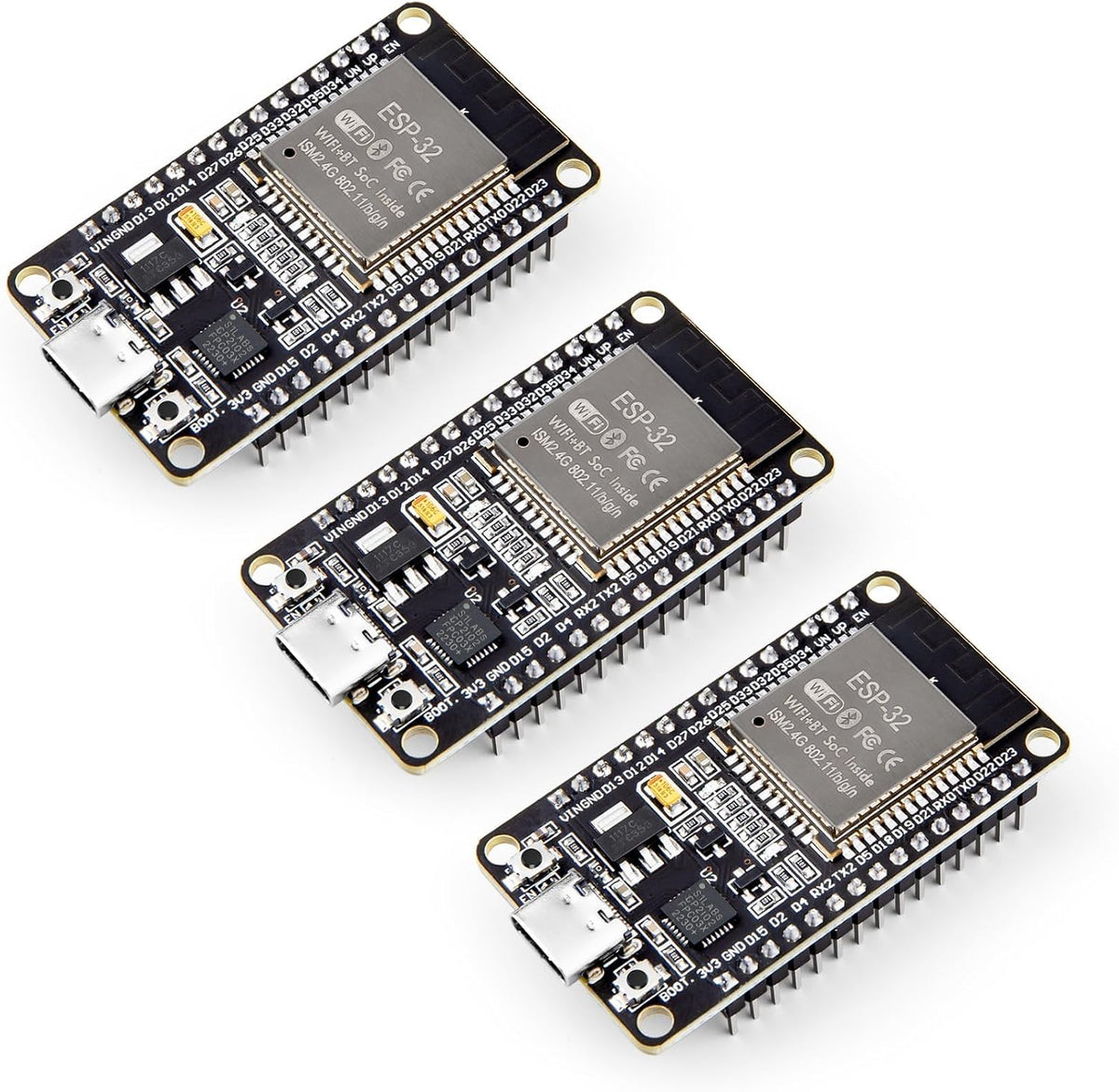
ELEGOO 3PCS ESP-32 Dev Boards, ESP-WROOM-32, USB-C, WiFi Bluetooth 4.2

ELEGOO 3PCS ESP-32 Dev Boards, ESP-WROOM-32, USB-C, WiFi Bluetooth 4.2

Regular price £16.37 GBP
Regular price £15.02 GBP Sale price £16.37 GBP
Sale Sold out
Taxes included. Shipping calculated at checkout.
Quantity
ELEGOO

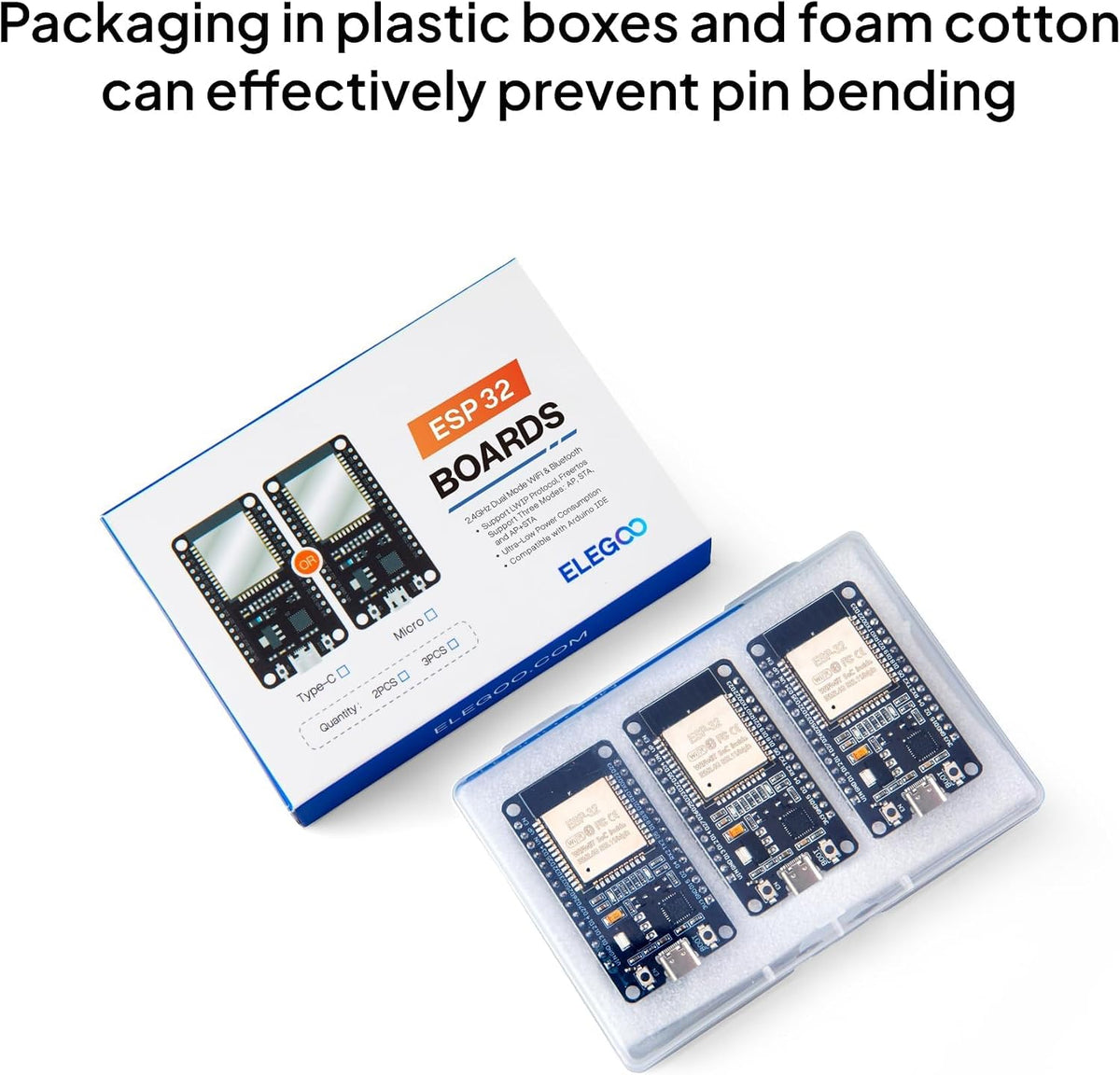
Build connected embedded projects with the ELEGOO 3-Pack ESP32 Development Board Set. Each board combines the classic ESP-WROOM-32 module, a USB-C connector and a CP2102 USB-to-serial interface.

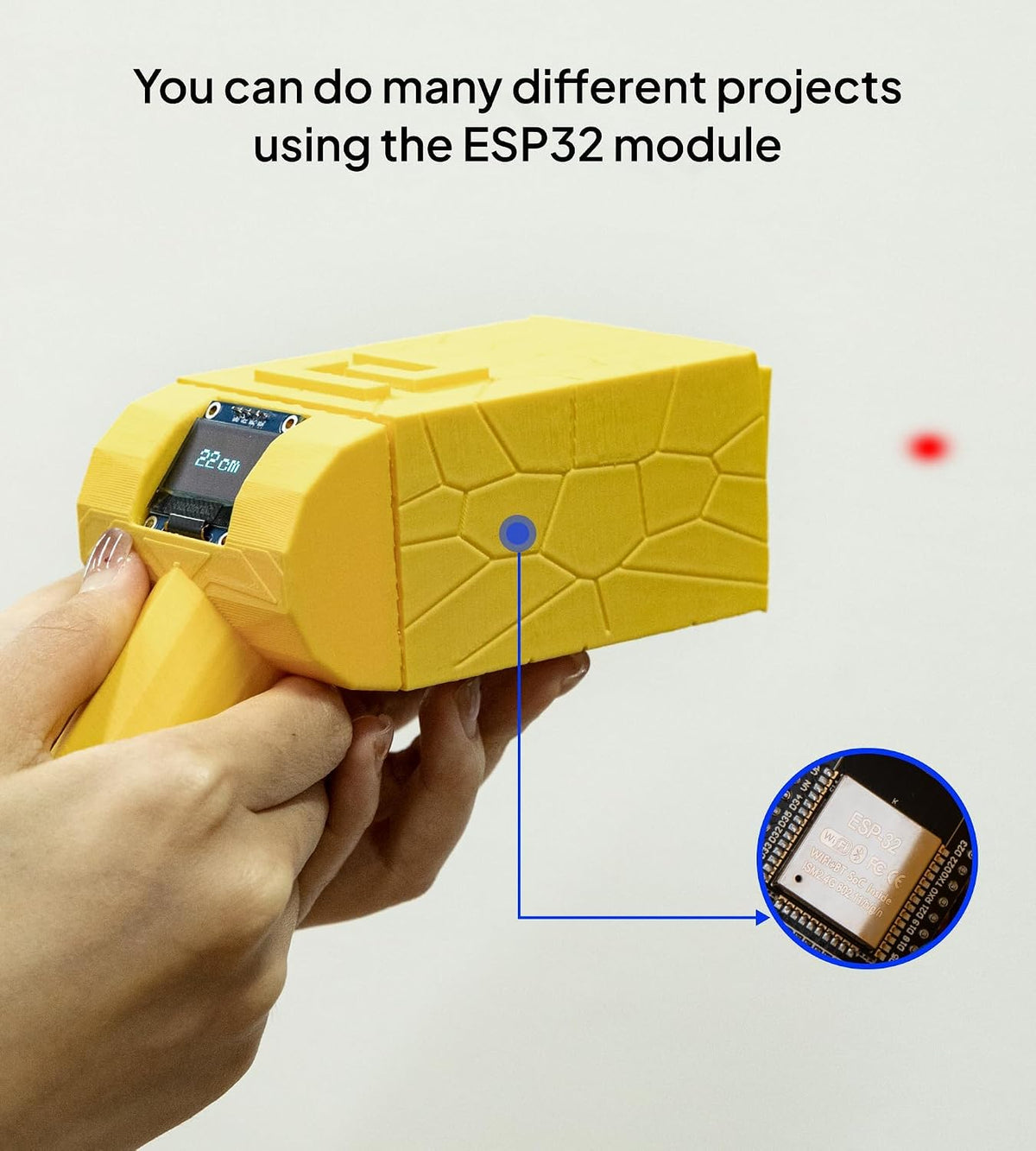
  • Use the boards for environmental sensors, robot controls, web dashboards, MQTT devices, ESPHome nodes, data loggers, smart switches, LED systems, alarms and classroom IoT projects.
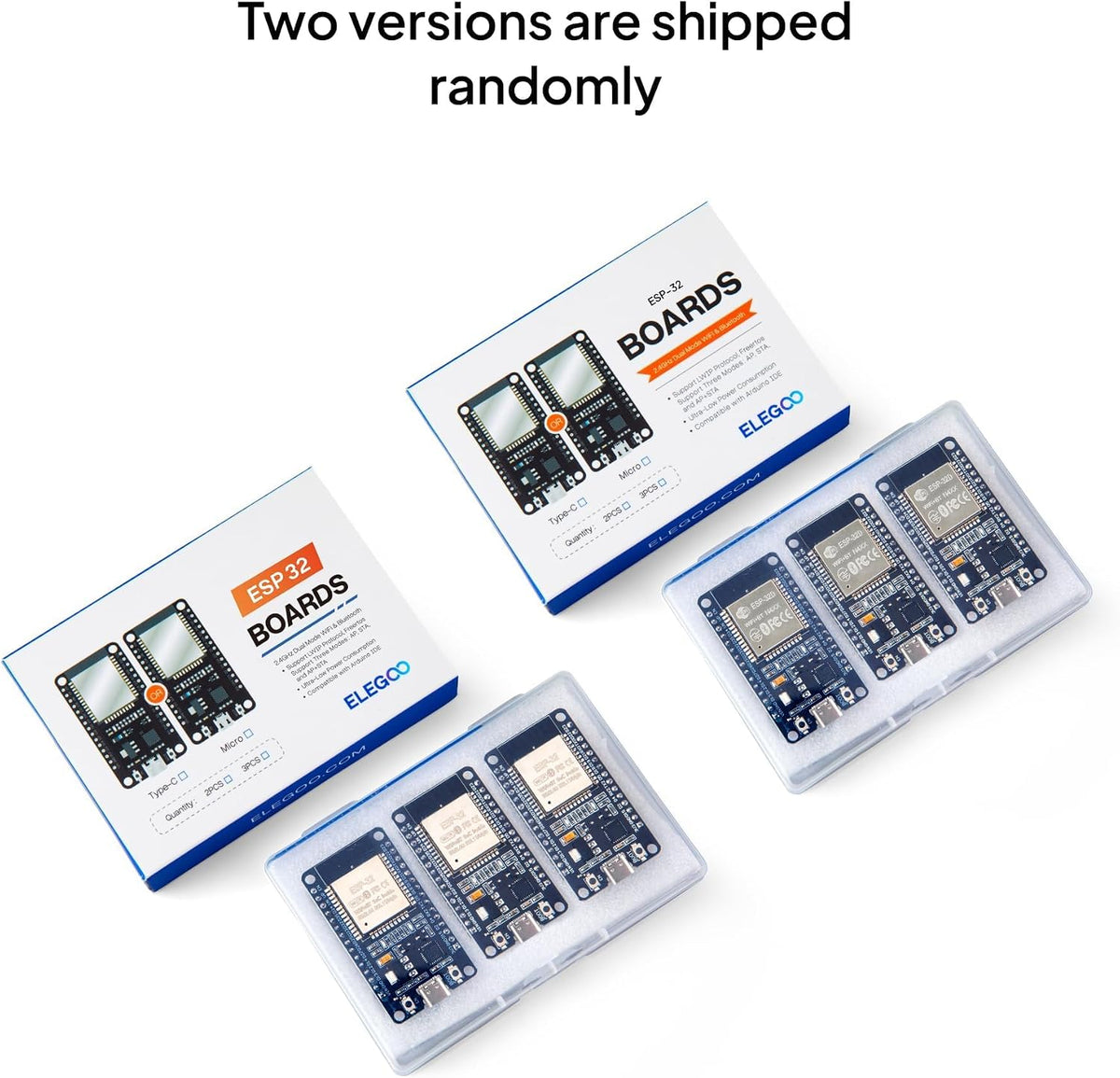
  • The package contains three USB-C ESP32 development boards only. USB cables, breadboards, jumper wires, sensors, batteries, power supplies and tutorials are not included.

Features:

  • Integrated 2.4GHz 802.11 b/g/n Wi-Fi supports station, access-point and combined AP+STA modes, while Bluetooth 4.2 provides BR/EDR and Bluetooth Low Energy connectivity.
  • Bluetooth Connection Distance: 10 m
  • The ESP-32 is dual-core 32-bit processor, which means it has 2 processors. Xtensa LX6 processor runs at up to 240 MHz.
  • Memory: 520 KB on-chip SRAM and 4 MB SPI flash
  • This is the classic ESP-WROOM-32 platform. It runs 32-bit programs.
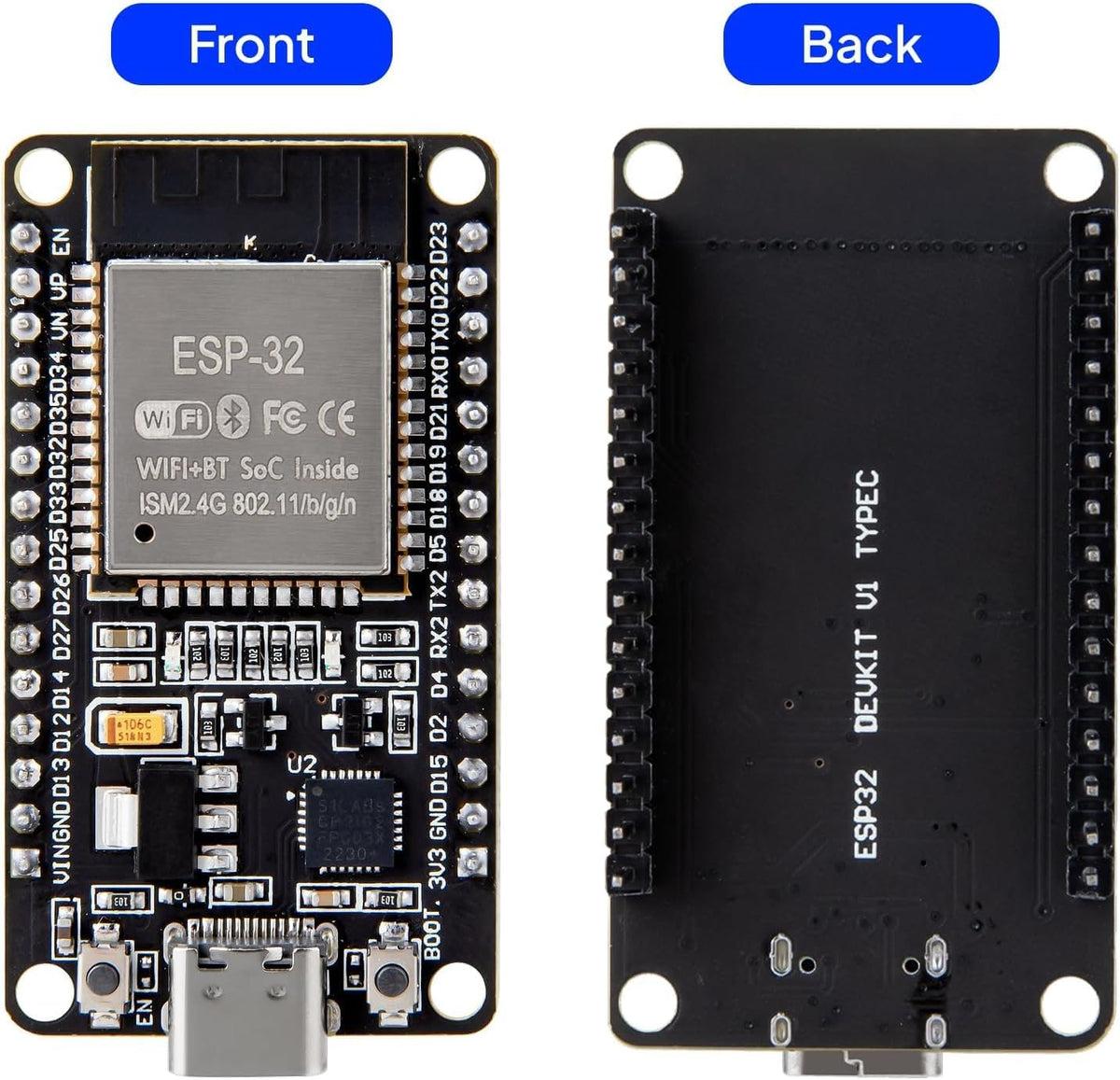
  • This particular board has 30 pins.
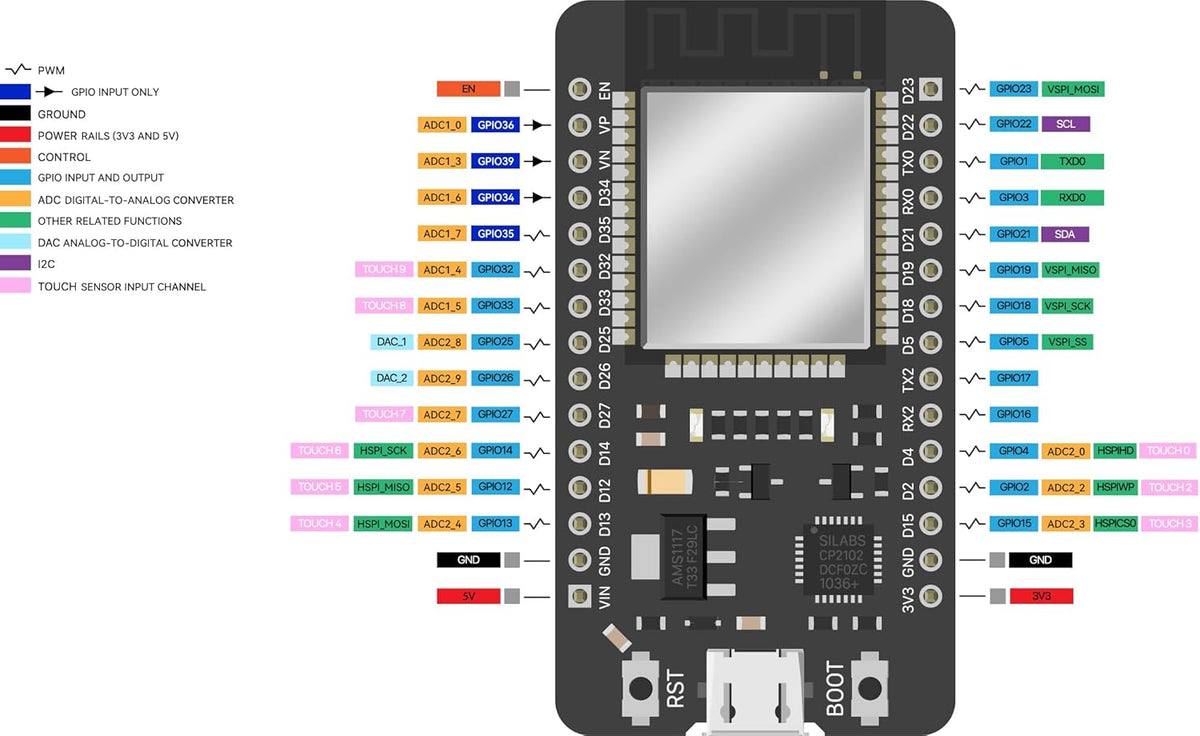
  • Available peripherals include UART, SPI, I2C, PWM, ADC, DAC and capacitive touch for sensors, displays, storage and motor-driver modules. GPIO signals use 3.3 V logic; do not apply 5 V directly to an ESP32 GPIO. Check the board pinout before using input-only pins or boot-strapping pins. ADC2 readings may be unavailable while Wi-Fi is active.
  • Sensor: On-chip Hall sensor
  • USB-to-UART Bridge: The onboard CP2102 provides USB-to-UART communication for programming and serial debugging
  • ELEGOO ESP-32 development board is well-suited for applications in the Internet of Things (IoT), smart home, and wearable device domains, thanks to its powerful processing capabilities, comprehensive wireless connectivity, power-efficient design, and versatile peripheral interfaces. Additionally, the open-source software support provided offers great convenience for developers.

Notice:

  • Due to the limited space, generally, to build your ESP-32 projects comfortably and avoid crowded connections, we recommend using two breadboards. This setup gives you plenty of space for neat wiring and reliable circuits.
  • Connect a data-capable USB-C cable, install the Silicon Labs CP210x driver if the computer does not create a serial port, select an ESP32 Dev Module profile and choose the correct COM port. If uploading does not begin, disconnect external wiring from boot-related pins and press or hold BOOT while the IDE starts flashing.
  • Disconnect power before rewiring, share ground with external circuits and use suitable drivers and separate power supplies for motors, relays, heaters and other high-current loads.

Stable Wi-Fi & WLED Setup:

Stronger Wi-Fi Connection

  • Keep the PCB antenna clear of metal objects and reduce distance, walls and 2.4 GHz interference between the ESP32 and router. RSSI around -50 to -60 dBm generally indicates a strong signal; around -80 dBm indicates a weak connection

Stable Power for WLED

  • Use a stable power source with sufficient current capacity. Power LED strips and other high-current loads separately instead of drawing their operating current through the ESP32 development board

Check GPIO Before Adding Touch Controls

  • When using TTP223 touch sensors or buttons with WLED, select an available GPIO and avoid boot-strapping pins or pins already assigned to LEDs and other functions

ELEGOO ESP32 Dev Board USB-C 3-Pack
ELEGOO Nano V3 USB-C Board 3-Pack
ELEGOO UNO R3 Board CH340C
ELEGOO UNO R3 Board ATmega16U2
ELEGOO MEGA 2560 R3 Board
Customer Reviews
4.7 out of 5 stars 551
4.5 out of 5 stars 143
4.8 out of 5 stars 123
4.7 out of 5 stars 5,052
4.7 out of 5 stars 3,325
Price $19.99 $15.99 $11.99 $16.99 $22.99
Main MCU ESP32 / ESP-WROOM-32 ATmega328P ATmega328P ATmega328P ATmega2560
Clock Speed Up to 240 MHz 16 MHz 16 MHz 16 MHz 16 MHz
Logic Voltage 3.3 V GPIO 5 V 5 V 5 V 5 V
I/O Overview Multiple GPIO, ADC & PWM* 14 Digital / 8 Analog 14 Digital / 6 Analog 14 Digital / 6 Analog 54 Digital / 16 Analog
Memory 520 KB SRAM / Flash TBD** 32 KB Flash / 2 KB SRAM 32 KB Flash / 2 KB SRAM 32 KB Flash / 2 KB SRAM 256 KB Flash / 8 KB SRAM
Wireless Wi-Fi + Bluetooth 4.2 None None None None
USB Interface USB-C / CP2102 USB-C / CH340 USB-B / CH340C USB-B / ATmega16U2 USB-B / ATmega16U2
Best For IoT, wireless sensing, smart home, remote monitoring and automation projects using Wi-Fi and Bluetooth Compact breadboard builds, sensor nodes, small robots and embedded projects where space and USB-C matter Breadboard experiments, sensors, motor control, classroom projects and general electronics prototyping Electronics learning, shield-based builds, sensors, robotics, automation and repeatable lab prototypes Large I/O projects, multi-sensor systems, robotics, CNC, automation and builds needing more serial ports

* ESP32 GPIO functions vary by pin; refer to the board pinout for available and special-function pins

** Confirm the current production module flash capacity before publishing

  • Dual-Core Performance Up to 240 MHz: Run sensor processing, wireless communication, automation logic and connected-device tasks on a 32-bit dual-core ESP32 platform designed for responsive embedded and IoT projects
  • Built-in Wi-Fi and Bluetooth 4.2: Connect to 2.4 GHz Wi-Fi networks or use Bluetooth Classic and BLE for wireless sensors, smart devices, remote controls, home automation and other connected projects
  • Flexible Power-Saving Modes: ESP32 power-management features support dynamic clock scaling and low-power operating modes, helping developers reduce energy use in compatible sensing, monitoring and connected-device applications, suitable for battery-powered Internet of Things (IoT) devices.
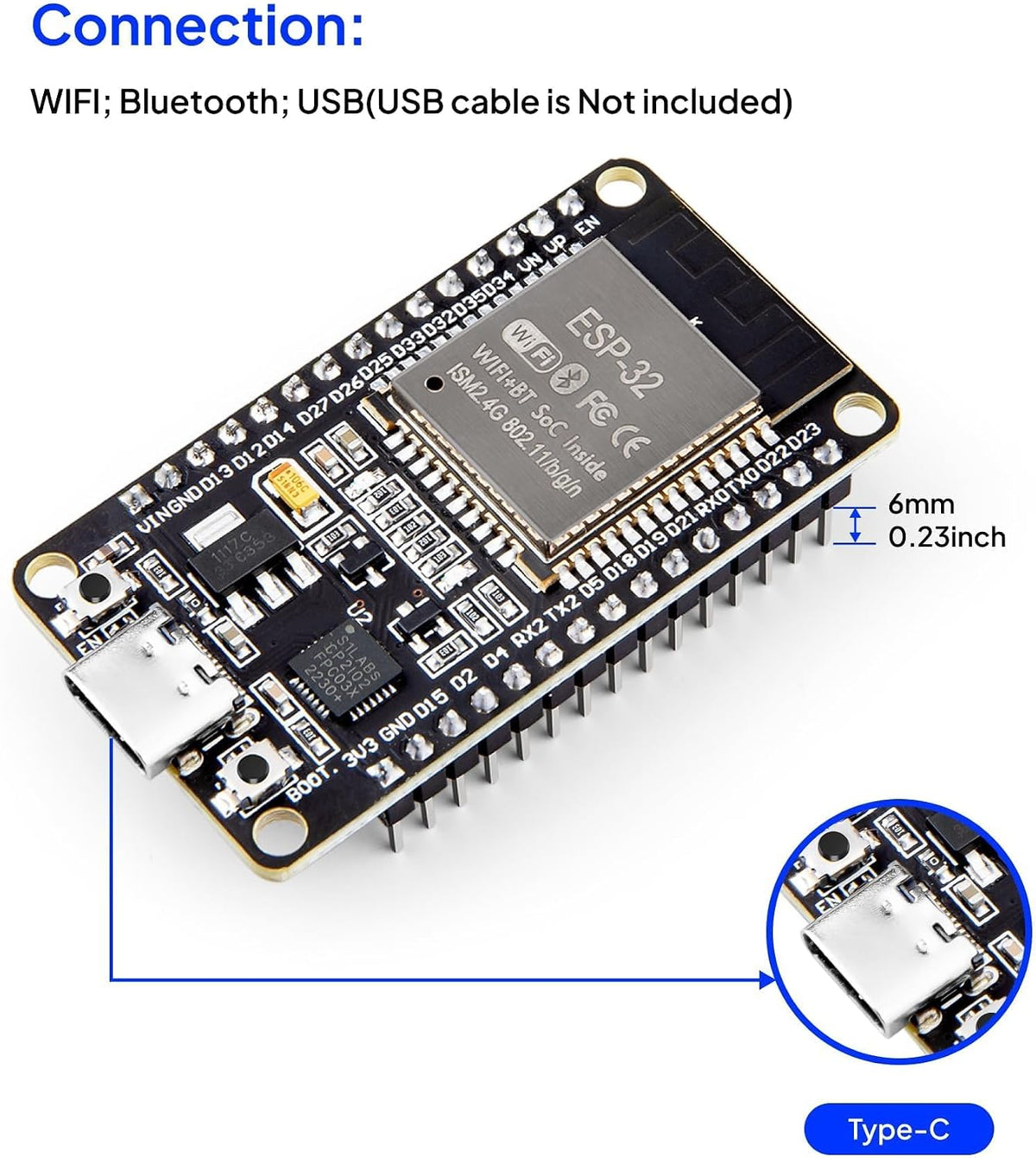
  • USB-C Programming with CP2102: Connect through USB-C for power, sketch uploads and serial monitoring, while GPIO, UART, SPI and I2C interfaces support sensors, displays, motor drivers and other modules (USB-C cable not included)
  • Over-the-Air Update Support: Configure OTA functionality through a compatible ESP-32 software framework to update deployed firmware over Wi-Fi without reconnecting the board by USB for every revision
View full details